Valorant Champions Shanghai, what Day 7 of the group stage revealed
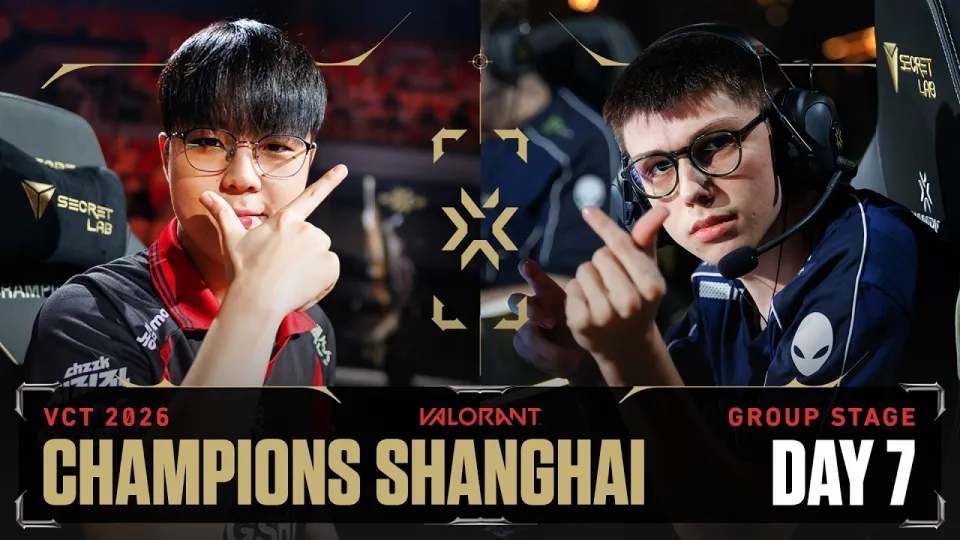
Video: VALORANT Champions Shanghai — Group Stage — Day 7
Want articles like this for your own video to promote it on YouTube and Google? Order them through the Telegram bot @sat_sit_bot. The bot writes and publishes the articles itself (with your YouTube video embedded) on popular topical websites (no ads). Try it free: 50 articles on us.
· based on the channel VALORANT Champions Tour
Valorant Champions Shanghai is the 2026 world championship of the VALORANT Champions Tour, and Day 7 of the group stage is the point where the 16-team field stops being theoretical and starts producing eliminations. The group stage runs inside the wider September 24 – October 18 event window, and by Day 7 every remaining match directly affects who reaches the playoff bracket. For live scores, bracket updates and clips as they land, the official esports account at https://x.com/valorantesports is the fastest public feed.
The Day 7 broadcast, published by the VALORANT Champions Tour channel, is a full-length group stage VOD rather than a highlight reel: several maps, a long desk segment and a stack of technical pauses. That makes it a useful snapshot of where the tournament stands — and of the complaints viewers are actually voicing.
What Valorant Champions Shanghai is and how the group stage works
Valorant Champions Shanghai is the season-ending world championship, and its group stage is a round-robin phase that cuts sixteen invited teams down to a playoff bracket. Sixteen rosters qualified from four regions — Americas, CN, EMEA and Pacific — and only the top of each group advances, which is why a single dropped map on Day 7 can end a season.
The structure matters for reading the VOD correctly:
- Sixteen teams are split into groups, and each group plays a round robin rather than a single-elimination bracket.
- Map differential and round differential act as tiebreakers, so a 2–1 win is not the same as a 2–0.
- The group stage closes before the playoff bracket, meaning Day 7 results decide seeding and matchups, not just survival.
- Every match is played on the current competitive map pool, so pick-and-ban drafts are as important as aim.
The event is supported by a partner roster that includes AWS, Coinbase, EWC, ENC, Globant, HyperX, Mastercard, OnePlus, Red Bull, Secretlab and Verizon — a reminder that Champions is the commercial centerpiece of the VCT calendar, not a side event.
The 2026 context: two Masters champions and an open field
The 2026 season produced two different Masters winners, which is exactly why the Shanghai group stage feels unstable. When the same team wins both mid-season internationals, the world championship becomes a coronation; when two different teams lift trophies, every group becomes a genuine argument about which region is actually ahead.
That framing shapes how Day 7 should be watched. Familiar names arrived with expectations built on past Champions runs, while a newer generation of challengers arrived with nothing to protect. The broadcast leans into that tension, and the group stage results back it up: seeded favorites dropping maps, underdogs taking series they were not supposed to win, and tiebreakers doing real work.
Technical pauses and broadcast pacing on Day 7
The most visible story of the Day 7 broadcast is not a clutch — it is the number of technical pauses. Viewers repeatedly flagged the interruptions, with one popular comment thread dedicated entirely to timestamping them and another noting an "endless series of tech pauses."
That matters for anyone watching the VOD later:
- Pauses stretch the runtime well beyond the actual map time, so the video is long even by full-broadcast standards.
- Spoiler-avoidance comments and timestamp lists exist precisely because the interruptions break the flow of a rewatch.
- Repeated pauses also affect player rhythm; teams that rely on momentum and fast-paced executes are hit harder than slow, default-heavy squads.
If you are watching the Day 7 VOD for analysis rather than entertainment, skipping dead air between maps is the single biggest time saver.
Why Chinese teams drew criticism in the group stage
The harshest commentary around Day 7 targeted the CN representatives, and the criticism was specific rather than generic. Viewers pointed to lost anti-eco rounds, thrown 5v2 situations and utility usage that looked rehearsed rather than reactive — the sense that once set plays broke down, the teams had no second layer.
Three recurring themes in that criticism are worth separating from pure frustration:
- Economy management. Losing rounds against force-buys and eco stacks is the fastest way to hand a group opponent momentum.
- Man-advantage conversion. A 5v2 is a numbers problem, and failing to close it usually means poor spacing and staggered entries rather than bad aim.
- Utility creativity. When default setups are scouted, teams that cannot improvise smokes, flashes and recon tend to default into the same site every round.
There is a counterargument in the comments too: some viewers argued that stronger teams from other regions missed Champions entirely, which makes the CN showing look worse than the region's actual level. Both readings can be true at once — a qualification system that concentrates slots in one region will always produce lopsided group results.
Individual moments and player-level talking points
Beyond the scoreline, Day 7 produced the kind of micro-moments that esports audiences actually rewatch. One widely liked comment flagged a split-second misread where a Yoru clone looked, for a heartbeat, like a teammate helping hold a site — the sort of visual confusion that only Valorant's utility design can create.
On the player side, veteran names carried the conversation. A chant-style comment backing nats for president is the usual shorthand for a support player quietly deciding rounds with initiator utility and site-anchoring. Meanwhile, frustration aimed at individual players — a blunt question about what one pro was doing, and calls to "free" a benched or underused name — shows how quickly group stage losses get assigned to single roster decisions.
None of that changes the bracket. It does explain why the Day 7 VOD has more discussion in its comments than most playoff matches: group stage Valorant is where narratives form before the stakes make everyone cautious.
How to watch the Day 7 VOD efficiently
Watching a multi-hour group stage broadcast after the fact is a skill, and Day 7 rewards a specific approach. The full VOD is best treated as an archive of the day rather than something to sit through linearly.
- Check the bracket first so you know which matches actually mattered for qualification.
- Use community timestamp lists to jump between maps, and expect gaps where tech pauses were edited or left in.
- Watch the pistol rounds and the first gun round of each half — that is where set plays and economy decisions are most visible.
- Skip the desk segments unless you want the regional narrative, since the analysis there is broad by design.
- Watch the losing team's attack halves if you care about the utility-usage criticism, because that is where defaults break down.
For ongoing coverage, the official channels post clips, interviews and schedule changes faster than any recap: https://www.twitch.tv/valorant for live, and the VALORANT Esports news page at https://www.valorantesports.com/news for written updates.
Useful links
- Live scores and announcements: https://x.com/valorantesports
- Facebook: https://www.facebook.com/ValorantEsports/
- Instagram: https://www.instagram.com/valorantesports/
- TikTok: https://www.tiktok.com/@valorantesports
- Twitch: https://www.twitch.tv/valorant
The takeaway from Day 7
Day 7 confirmed that the Shanghai group stage is doing its job: it is separating teams that can adapt mid-series from teams that only execute rehearsed setups. The technical pauses and the CN results will dominate the comment sections, but the more important signal is how many group matches went the distance — a sign that the gap between regions at this Champions is thinner than the seeding suggested. The VALORANT Champions Tour channel is the source for the full Day 7 broadcast and the rest of the group stage run. Follow https://x.com/valorantesports for bracket updates before the playoff bracket locks, because the next two days decide who even gets to play for the trophy.
Key takeaways
- Valorant Champions Shanghai runs September 24 to October 18, with 16 teams from Americas, CN, EMEA and Pacific.
- Day 7 of the group stage is the penultimate day of group play before the playoff bracket is locked.
- Two different teams won Masters events in 2026, so Shanghai seeds a wide-open field.
- The Day 7 broadcast was repeatedly interrupted by technical pauses, a recurring theme in viewer comments.
- Chinese teams drew heavy criticism for losing eco and 5v2 rounds and for predictable utility usage.
Questions & answers
How many teams play at Valorant Champions Shanghai?
Sixteen teams qualify from four regions: Americas, CN, EMEA and Pacific. They are drawn into groups and play a round robin, with only the top teams in each group advancing to the playoff bracket.
Why were there so many technical pauses on Day 7?
The broadcast was interrupted repeatedly by technical pauses, and viewers built timestamp lists specifically to skip them on rewatch. The pauses stretch the runtime far beyond the actual map time, which is why the VOD feels unusually long.
Did Chinese teams really underperform in the group stage?
Viewers pointed to lost anti-eco rounds, failed 5v2 conversions and predictable utility usage as the core problems. Others argued that stronger teams from other regions missed qualification entirely, which makes the CN results look worse than the region's real level.
Is the Day 7 VOD worth watching in full?
Only if you want the complete broadcast including desk analysis. For actual gameplay, use community timestamps, focus on pistol rounds and first gun rounds, and skip the dead air created by pauses.
Source: VALORANT Champions Shanghai — Group Stage — Day 7 · Markdown version